
![[Webinar] The Role of Christians in Fighting Corruption](https://fpinetwork.org/wp-content/uploads/2023/06/raul-cacho-oses-z4x9itbe040-unsplash.jpg?w=760)

![[Webinar] Corruption and Anti-Corruption in Health Care: Why do we speak so little about them?](https://fpinetwork.org/wp-content/uploads/2021/12/victoria-strukovskaya-xc0ul_ar3ss-unsplash-e1639976661620.jpg?w=760)
![[Event] Global Integrity Day: Courage against corruption during COVID-19](https://fpinetwork.org/wp-content/uploads/2021/06/bulb-creative-cfrruuvtmcu-unsplash.jpg?w=760)
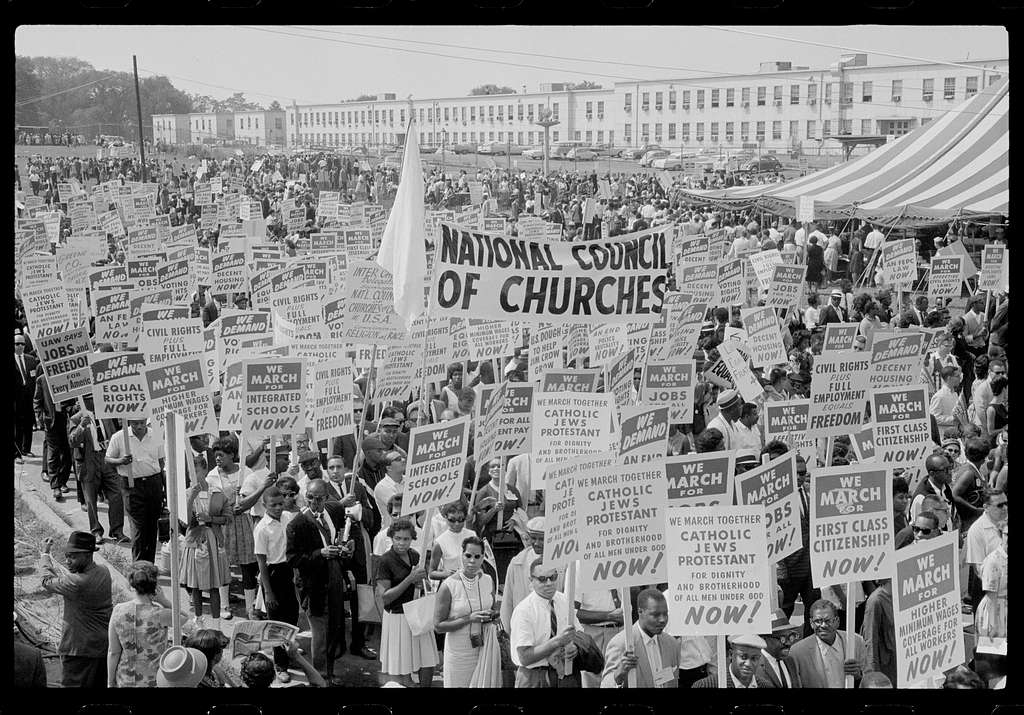
How might faith-based actors play a role in changing values and norms of corruption?
FPIN member Roberto Laver’s “How might faith-based actors play a role in changing values and norms of corruption?” originally published on the Corruption and Fragile States Blog of the Fletcher School on March 29, 2021 Having grown up in Argentina, with its consistently high levels of societal corruption, I am quite familiar with the significant…
![[Webinar] Faith and Anticorruption](https://fpinetwork.org/wp-content/uploads/2021/03/bible-sixteen-miles-out-biwfwr2fssa-unsplash.jpg?w=1200)
[Webinar] Faith and Anticorruption
The Joint Learning Initiative on Faith and Local Communities and the Faith and Public Integrity Network co-hosted a Faith and Anticorruption webinar on March 22, 2021. Listen to the conversation below that explores the opportunities and challenges for faith leaders and organizations in promoting public integrity and fighting corruption. Corruption, particularly endemic corruption, is widely…
![[Online course] “Corrupción y la fe cristiana”(Corruption and Christianity)](https://fpinetwork.org/wp-content/uploads/2020/11/vine-belle-hunt-scvs0tkffse-unsplash-wide.jpg?w=1200)
[Online course] “Corrupción y la fe cristiana”(Corruption and Christianity)
Under the teaching voice of Fides founder, Roberto Laver, this extensive course in Spanish takes learners through a Scripture-infused journey to learn about why we need to invest deeply in fighting corruption and growing in our own public integrity.

10 Resources for Integrity and Anti-corruption: Moral Resilience and Relevance for the Church Mission Community
An article by Kelly O’Donnell organizes and introduces 10 integrity and anti-corruption resources that have been developed within the Lausanne Movement; 5 resources were written for its third Congress (2010), and 5 resources have been written since then (2010-2020).

Remarks at the Launch of Institutional Integrity Report, 2018
This report discusses the concept of institutional integrity, how it has been applied in practice, and the potential of international cooperation to contribute to it.
![[Article] The Other Pandemic: COVID and the Cost of Corruption](https://fpinetwork.org/wp-content/uploads/2020/09/pexels-photo-4197562-e1601407206950.jpeg?w=1200)
[Article] The Other Pandemic: COVID and the Cost of Corruption
The coronavirus pandemic has taken a drastic human toll, infecting millions and killing hundreds of thousands of people worldwide. This is not only a health crisis but also an economic and social one. Throughout the world, the virus has compelled governments to severe lock downs, causing the most brutal recession in living memory. The impact…
![[Article Review] “The Psychology Behind Unethical Behavior”](https://fpinetwork.org/wp-content/uploads/2020/08/pexels-photo-839428-e1601407261442.jpeg?w=866)
[Article Review] “The Psychology Behind Unethical Behavior”
Some introductory comments by Kelly O’Donnell, PsyD on the article:The Psychology Behind Unethical Behavior by Merete Wedell-Wedellsborg, Harvard Business Review (12 April 2019) A bitter truth is better than a sweet lie. Uzbek proverb Wondering what makes us “tick” when it comes to making unethical decisions? This article can help. It offers a quick, readable…
![[Webinar] Open Consultation: How to use digital media to stir believers into action?](https://fpinetwork.org/wp-content/uploads/2020/08/pexels-photo-4195335.jpeg?w=1200)
[Webinar] Open Consultation: How to use digital media to stir believers into action?
In response to a lively email dialogue, we organized a webinar consultation hosted by Peter Mathias about his ongoing work in Nigeria. Peter kicked off the discussion with context about his work, then invited a discussion that dove into positive messaging strategies, collaboration, and potential examples to learn from in Uganda, Honduras, and Kenya. Video Audio only
![[Webinar] 4 forces pushing against discipleship for integrity](https://fpinetwork.org/wp-content/uploads/2020/06/alejandro-morelos-qajnxckgaco-unsplash.jpg?w=1200)
[Webinar] 4 forces pushing against discipleship for integrity
Weak systems of governance are not the only root cause of corruption. Permissive cultures that facilitate the normalization of corrupt behavior provide fertile ground for corruption to take root. As an institution whose purpose is to form strong values and integrity, why is it that the church has not been able to confront corruption through…
Guía Metodológica para Auditoría Social (Social Audit Guide)
This document is a methodological guide to conduct social auditing, as a result of the systematization and evaluation of experiences in the process of citizen participation, transparency and accountability.
![[Webinar] Auditoría social: Gobiernos que funcionan mejor (Social Auditing: Making government systems work)](https://fpinetwork.org/wp-content/uploads/2020/05/pexels-photo-669610.jpeg?w=1200)
[Webinar] Auditoría social: Gobiernos que funcionan mejor (Social Auditing: Making government systems work)
Government programs provide a variety of social services: education for children, delivery of medicines, and legal protection. But what happens when those programs do not perform as they are designed to? What happens when the government staff take wrongful advantage of their position?
![[Panel] Working at the intersection of faith, corruption, and public integrity](https://fpinetwork.org/wp-content/uploads/2020/03/stories-session.png?w=1200)
[Panel] Working at the intersection of faith, corruption, and public integrity
FPIN members share their own experiences in fighting corruption – Arpit Waghmare in India, Elda Valim Fim in Brazil, and Jean-Luc Krieg in Mexico.
Something went wrong. Please refresh the page and/or try again.
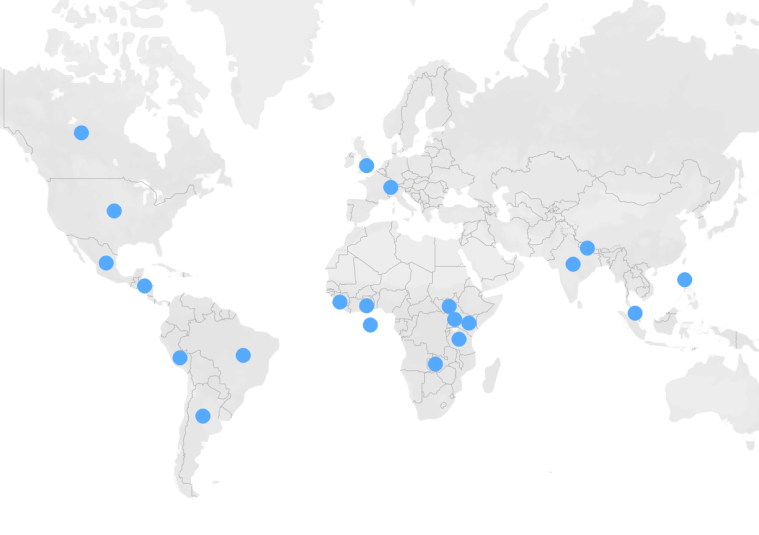
Browse our interactive map
 The Faith & Public Integrity Network